Why anti-authoritarian t-shirts Remain a Staple of Activist Wear
For more than half a century, what we wear has been a quiet but powerful way to announce where we stand. From the simple peace sign of the 1960s to the bold, unapologetic graphics of modern protest movements, clothing has carried messages that people sometimes cannot speak aloud. Among the most enduring categories of this kind of apparel is the anti-authoritarian t-shirt. It is not just a piece of fabric. It is a declaration that the wearer refuses to bow to unchecked power, that they value free speech and democracy over blind obedience.
I have been involved in grassroots organizing for over fifteen years, and I have seen how a single shirt can shift the mood of a room. At a small rally for civil liberties a few years ago, a woman in a simple black shirt with a satirical design of a politician as a puppet drew laughs and nods from the crowd. That shirt, like so many others, did not just make a point. It broke the tension, gave people permission to smile, and reminded everyone that protest art can be both serious and playful. That is the genius of satirical merchandise. It disarms while it challenges.
The best anti-authoritarian t-shirts work on multiple levels. They signal solidarity to allies and they provoke thought in onlookers. They are a form of resistance fashion that does not require a stage or a microphone. You wear one to the grocery store, to a public meeting, or to a family dinner, and you start a conversation. The message is there, printed in ink, but the meaning lives in how people react to it. Some will smile and nod. Others will frown and look away. A few will want to argue. That is the point. Free expression, even on a shirt, is an act of participation in democracy.
The Roots of Political Satire in Everyday Wear
Political satire has a long history, from the cartoons of Hogarth to the biting humor of modern late-night shows. But putting that satire on a shirt makes it portable, personal, and persistent. Unlike a meme that disappears in a scroll, a satirical t-shirt stays visible for hours. It walks through the world with the wearer, carrying its message into spaces where political merchandise might not otherwise appear. A coffee shop, a bus, a school hallway. These are the places where civil rights and free speech t-shirts do their best work, not in echo chambers but in the messy, unpredictable public square.
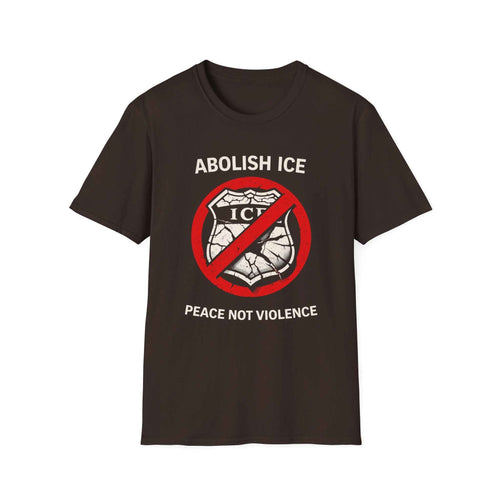
I remember the first time I saw a shirt that said "Question Authority" with the text arranged to look like a bureaucratic stamp. It was the late 1990s, and I was in a bookstore in Portland. The design was simple, almost minimalist, but it carried a weight that a thousand words could not. That shirt did not tell you what to think. It told you to think. That is the core of anti-authoritarian design. It does not preach. It invites. It says, "Look at this. What do you make of it?" That invitation is what separates effective protest t-shirts from mere sloganeering.
How Bold Satire Shapes Modern Activist Apparel
Today, the market for activist wear is more sophisticated than ever. Designers understand that a shirt must be visually compelling at a distance, readable in a crowd, and still comfortable enough to wear all day. Bold satire works because it uses humor to lower defenses. A person who might bristle at a direct accusation will laugh at a clever cartoon. And once they laugh, they are open to the idea underneath the joke. That is why so many democracy defenders lean on satirical designs. They know that laughter is a Trojan horse for truth.
One of the most effective anti-authoritarian t-shirts I have seen recently featured a simple drawing of a crown with the words "No Kings" underneath. It was not complicated. It did not reference any specific person or event. But in a time when democratic norms are under pressure, that shirt spoke volumes. It connected the wearer to a long tradition of anti-establishment thought, from the American revolutionaries to the anti-colonial movements of the twentieth century. It said, in three words and one image, that power belongs to the people, not to the people who hold it.
Of course, not every shirt needs to be a masterpiece of political theory. Some of the best protest art is purely emotional. A shirt that simply says "Resist" in bold red letters can be just as powerful as a complex cartoon, depending on the moment. The key is authenticity. People can tell when a shirt is made for profit rather than principle. The most successful activist apparel comes from a place of genuine belief, from designers and sellers who are themselves part of the movements they support.
Practical Advice for Choosing Your Own Statement Piece
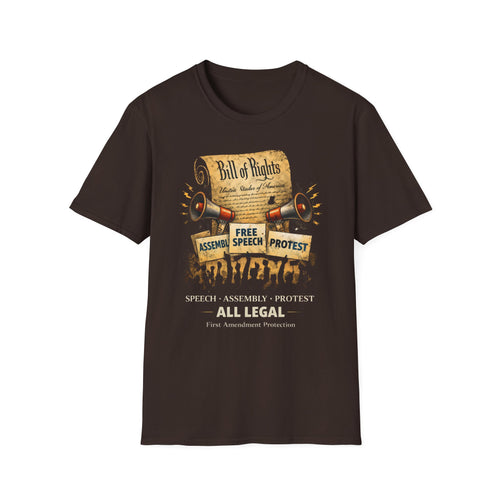
If you are considering adding an anti-authoritarian t-shirt to your wardrobe, there are a few things worth thinking about. First, consider the message. Is it specific to a current issue, or is it timeless? A shirt about a particular election might feel dated in a year, while a shirt about free speech or civil liberties will remain relevant for decades. Second, think about the design. Does it rely on inside jokes that only activists will understand, or can it speak to a broader audience? The best shirts work on both levels.
Third, pay attention to quality. A shirt that fades or shrinks after two washes undermines its own message. Good activist wear is made to last, because the ideas it carries are meant to last too. Fourth, consider where you will wear it. Some environments are more receptive than others. A shirt that is perfect for a protest might cause problems at a job interview. That is not a reason to avoid wearing it, but it is a reason to be thoughtful about context. Finally, remember that the shirt is just a tool. The real work of defending democracy, civil liberties, and social justice happens in the actions you take, the votes you cast, and the conversations you have.
The Role of Satirical Merchandise in Resistance Fashion
Resistance fashion has always walked a line between statement and style. The best satirical merchandise manages to do both. It makes you look twice, think once, and smile somewhere in between. It is not about being angry all the time. It is about being awake. And in a world where information overload can make people numb, a well-designed shirt can cut through the noise like nothing else.
I have friends who collect political merchandise the way others collect concert t-shirts. Each shirt in their closet represents a moment, a cause, a fight that mattered. They wear them not just to remember, but to keep the fight alive. That is the quiet power of anti-authoritarian t-shirts. They are not just souvenirs. They are tools of persistence. They say, "I was here. I cared. I still do."
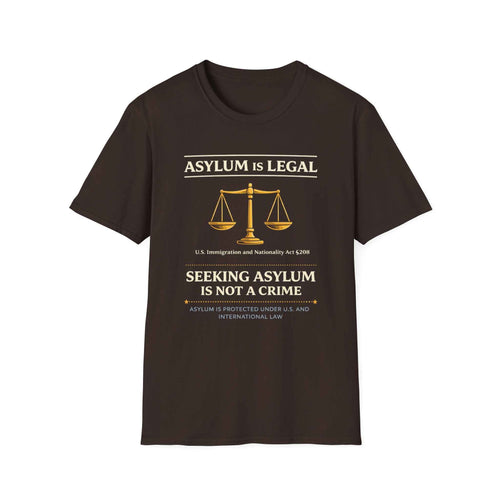
As long as there are people who believe in free expression, in civil rights, and in the right to question power, there will be a demand for clothing that says so. The particular designs will change. The slogans will evolve. But the impulse is as old as humanity itself. We want to show who we are. And sometimes, a shirt is the best way to do it.